Ethnic groups

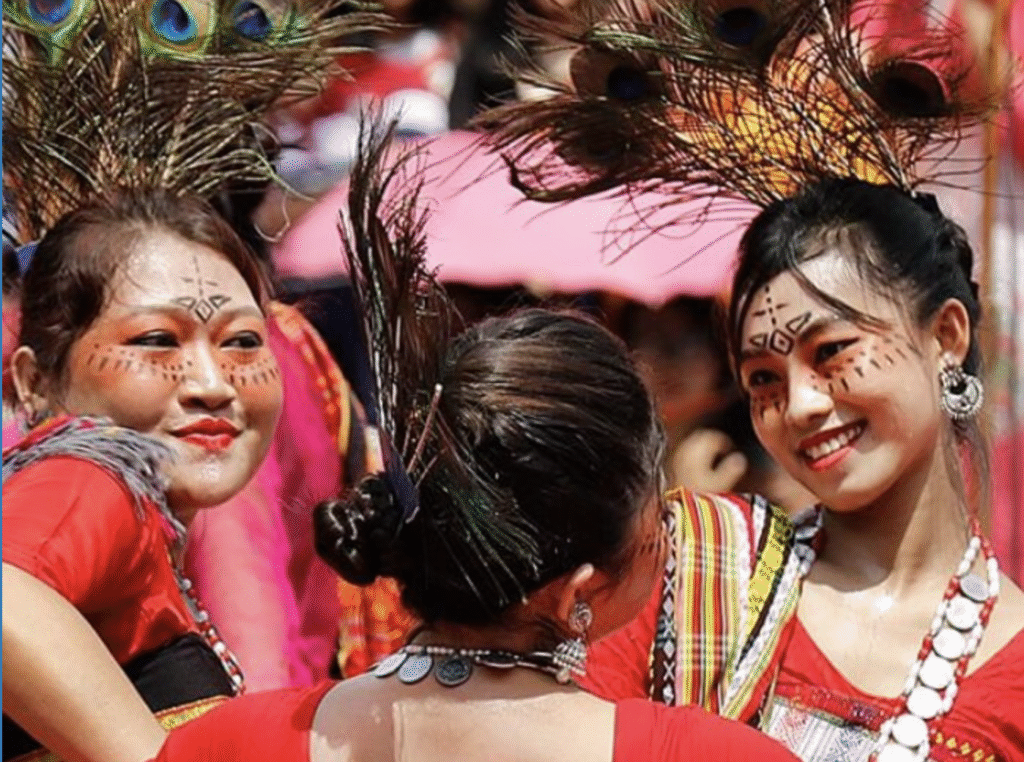
The vast majority of the population of Bangladesh is Bengali—a term describing both an ethnic and a linguistic group. The Bengali people are historically of diverse origin, having emerged from the confluence of various communities that entered the region over the course of many centuries. The Vedda peoples were perhaps the earliest group to settle in the area. According to some ethnologists, they were followed by peoples from the Mediterranean and neighbouring areas, particularly those who spoke Indo-European languages. During the 8th century CE, persons of Arab, Persian, and Turkish origin moved in large numbers to the subcontinent. By the beginning of the 13th century, they had entered what is now Bangladesh. The contention that contemporary Bengali Muslims are all descended from lower-caste Hindus who had converted to Islam, then, is clearly incorrect; a substantial proportion are descendants of Muslims who reached the subcontinent from elsewhere.
Bangladesh is inhabited by hundreds of species of birds. Common house crows are found everywhere, and their cries are detested by many people of Bangladesh, who regard crows as a bad omen. Bulbuls, magpie-robins, and a wide variety of warblers are also found; some are migrants that appear only in winter. Several kinds of flycatchers occur, and there are mynah birds of several kinds. Other species of birds include various game birds, parakeets, cuckoos, hawks, owls, kingfishers, hornbills, hoopoes, woodpeckers, and vultures. Among the eagles, the crested serpent eagle and the ring-tailed fishing eagle are the most common. There also are an array of water birds, including herons, storks, ducks, and wild geese.
Languages

Bengali (Bangla), the national language of Bangladesh, belongs to the Indo-Aryan group of languages and is related to Sanskrit. Like Pali, however, and various other forms of Prakrit in ancient India, Bengali originated beyond the influence of the Brahman society of the Aryans. The Pala rulers of Bengal (8th to 12th century)—who were Buddhists and whose religious language was Pali—did not inhibit the emergence of a colloquial tongue known as Gaudiya Prakrit, the language from which Bengali developed.
Bengali is the mother tongue of almost the entire population of Bangladesh. However, the indigenous minority groups have their own languages and dialects, some of which are Tibeto-Burman languages. English, an Indo-European language, is spoken in urban centers and among educated groups.
The Bengali language has two distinct styles: sadhu bhasa, the literary style, which contains many words derived from Sanskrit, and calit bhasa, the colloquial style, which is the standard medium of informal discourse, both spoken and written. Until the 1930s sadhu bhasa was used for all printed matter, but calit bhasa is now the basic form used for contemporary literature. There also are a number of dialects. Bengali contains many loanwords from Portuguese, English, Arabic, Persian, and Hindi.
Religion

Most of the people of Bangladesh follow the religion of Islam, which was made the official religion by a 1988 constitutional amendment. The arrival of Muslims in Bengal at the beginning of the 13th century and the rapid increase in their strength and influence permanently changed the character and culture of the area. When the Muslims first arrived, Hinduism was by far the dominant religion, although there were pockets of Buddhists and a few adherents of local religions. The Hindus remained in the majority through the Mughal period (16th to 18th century). Even as late as the early 1870s, there were more than 18 million Hindus in Bengal, compared with about 16 million Muslims. From the 1890s onward, however, the weight began to shift toward the Muslims.
There were several reasons for the increase in the proportion of the Muslim population. Perhaps the most significant was the activity of ascetics and Sufis (practitioners of Sufism, a mystical form of Islam), who won converts among lower-caste Hindus. Also significant was an influx of Muslims from northern India and from other countries.
Most Muslims are Sunni, but there are a small number of Shīʿites, primarily descendants of immigrants from Iran. Hindus form a significant minority, while Roman Catholics and Buddhists constitute just a tiny fraction of the population. Of the tribes in the Chittagong Hill Tracts, the Chakma, Marma, and Mro are mostly Buddhists. Portions of the Kuki, Khomoi, and Mro communities practice local religions. While most of the Mizo are Christians, the Tripura are Hindus.